The Roses’ contested separation under one roof
The War of the RosesThe Roses’ contested separation under one roof is both a legal arrangement and a domestic siege: Barbara Rose and Oliver Rose decide to divorce but remain in the house they built and furnished together. Because the law permits a no-fault divorce while spouses live separately under one roof, neither has to leave at once. Their continued proximity turns the home into a field of boundaries and disputes, while the children and Ann are drawn into the emotional consequences. The conflict is not only over who gets the property; it is also over what years of shared labor, ambition, and family life are worth when the marriage ends.
Background and Grounds for Separation
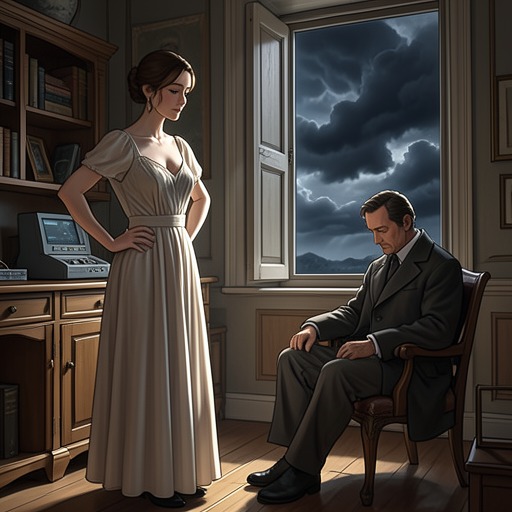
The rupture comes into focus when Barbara explains why she did not rush to New York to visit Oliver in the hospital: she did not care whether he lived or died. She clarifies that this is not a momentary anger but a feeling that has lasted a long time. Oliver is bewildered by the apparent speed with which she can dismiss a relationship and family, but her decision has been forming amid the life they made together.
That life had been organized around projects: Barbara supported Oliver through law school, raised their children, cultivated a home for his career, and helped build the family’s imposing house. She had also given up her schooling, and by her account devoted nearly twenty years to Oliver’s needs, security, and ambitions. As the children required less of her time, she turned toward cooking and a possible catering business. She had long been interested in the work, learned from her mother and professional cooks, and had helped design a kitchen with commercial use in mind. Oliver contributed vigorously to its construction, but Barbara was unsure whether his support reflected real confidence in her ability or condescension. The separation therefore begins against a history of genuine collaboration, but also of unequal opportunity and unresolved questions about whose aspirations the shared life served.
The Legal Arrangement and the House
Oliver initially expects the divorce to be civilized and says he is prepared to offer reasonable support and half the value of their joint property. He includes the house, its antiques, and other possessions in that offer, recalling how much love they invested in the home. Murray Goldstein challenges the assumption that a half-value settlement is equivalent to receiving the house itself. Under that arrangement, an independent appraiser would determine the market value; Oliver might borrow money to pay Barbara a lump sum, estimated at four or five hundred thousand dollars after fees. The distinction matters to Barbara because cash does not preserve the home or the life represented by it.
Barbara argues that she cannot match Oliver’s earning power and could not readily replace the house’s value through her own income. She wants the whole property, not merely a share of its appraised price. Her claim rests on more than attachment: she sees the house as the principal lasting result of years spent supporting Oliver’s career, giving up her education, raising their children, and contributing to the household. To her, keeping it would preserve a way of life she had helped create; a cash settlement would leave her with money but not that life.
Goldstein explains that Title 16-904, Section C permits a no-fault divorce even when the spouses remain in the same house, provided they live separately and do not cohabit. The waiting period is unchanged, and the court still decides who receives the house and its contents. If the dispute proves too contentious, a judge could order the property sold and the proceeds divided; an appeal could prolong the case. Oliver takes the option of staying as a chance to demonstrate his commitment to the house and hopes his presence might eventually make Barbara leave. Goldstein warns him that he must accept the arrangement and avoid giving her grounds for legal action. Oliver is also told to protect the collections, including his Staffordshire figures and wines, from being sold.
The Household Divided
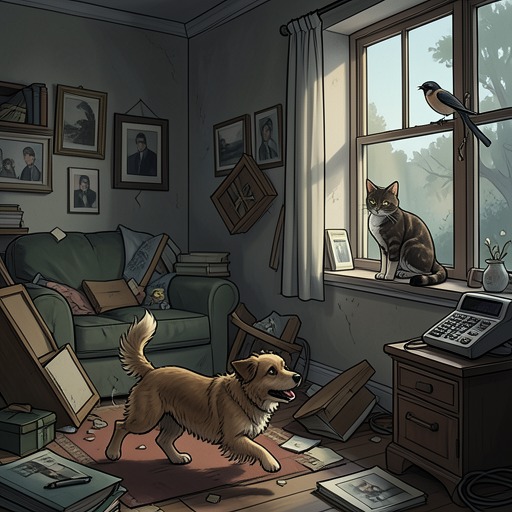
The spouses translate the legal separation into practical borders. They install locks on their separate bedrooms and arrange separate telephone lines, leaving one original line for the children. The kitchen becomes Barbara’s domain; Oliver gives up its food and facilities, keeps orange juice in his guest room, and takes his meals elsewhere. He maintains Benny with dry dog food stored in his room, while Benny continues to roam the neighborhood and returns at night to sleep at the foot of Oliver’s bed. Oliver retains his workroom, where he meets the children and sometimes Ann, and the garage space for his Ferrari. His orchids remain his responsibility as well.
These divisions do not produce peace. They make ordinary movements and possessions signs of separate authority, and the house is described as staked out like a battlefield. Ann attempts to remain scrupulously neutral but becomes an anxious observer of looks, stray words, and shifts in routine. Her own unrequited feelings for Oliver make that position more precarious, even as she conceals her interest. The children initially try to bring their parents together, then retreat into grudging acceptance when their hostility persists. Eve describes the separation to Ann as her mother’s declaration of independence and says Barbara wants to fulfill her own aspirations rather than remain an appendage. Eve understands that her mother has made the decision, but struggles to reconcile it with the family’s former image of a close, happy couple.
Money, Business, and Escalation
The arrangement’s boundaries are also financial. Barbara’s separation agreement bars her from using household money for her catering business, so she separates supplier invoices as instructed. But customers pay slowly, suppliers demand payment sooner, and she borrows from household funds to keep the business afloat. A meat supplier cuts her off, dismisses her bills, and tells her that women should not be in business. Barbara throws chopped meat at him; he drives a cleaver into the counter. The encounter sharpens her anger at the gendered obstacles she faces, while Harry Thurmont warns that her business success could hurt her divorce case and urges her to collect payment on delivery.
The separation agreement and its enforcement produce further conflict. Barbara accuses Oliver of harassment and violating the maintenance agreement; Goldstein obtains an injunction requiring her to keep business expenses separate. Oliver objects to the legal bills and to their reliance on interim court decisions while the main dispute remains unresolved. After this confrontation, they stop speaking for a time, settling into an armed truce rather than a reconciliation. Oliver curtails out-of-town travel, follows a routine of work, restaurant dinners, and movies, and keeps away from the house for much of his free time. The legal process thus regulates some conduct without repairing the relationship that made the dispute necessary.
Effects on the Family
The children experience the separation not as an orderly change of address but as an atmosphere that saturates the house. Eve tells Ann she will not go to camp because she fears leaving her parents alone together. She confides that she is afraid of what might happen while the children and Ann are away, and wishes that her parents would either make up or leave the house. The family still shares one roof, but, in Eve’s words, its members seem no longer to belong to a family so much as to live in the same house.
The children’s responses differ: Eve spends more time with her friends, while Josh finds relief in basketball and other sports and maintains contact with Oliver. Later, Eve’s fear resurfaces when she asks why her parents have not called or written. She insists that whatever their differences, they are still her parents. Ann promises to find out where they are and tell them to call, while privately wanting to keep Eve away from the house. The contested separation therefore extends beyond property and marital status: the unresolved conflict makes the home a source of danger and uncertainty for those who still depend on it as a family center.
The arrangement’s central contradiction is that legal permission to remain under one roof preserves the immediate status quo while magnifying the costs of the marriage’s collapse. The house contains the couple’s shared history, yet its rooms, collections, expenses, and routines become instruments of division. Barbara seeks independence and recognition for labor that a simple market valuation cannot capture; Oliver clings to the home and treats continued residence as a way to defend his claim. Their children and Ann are left to interpret the silence, boundaries, and fear produced by a separation that is formal but never physically distant.